
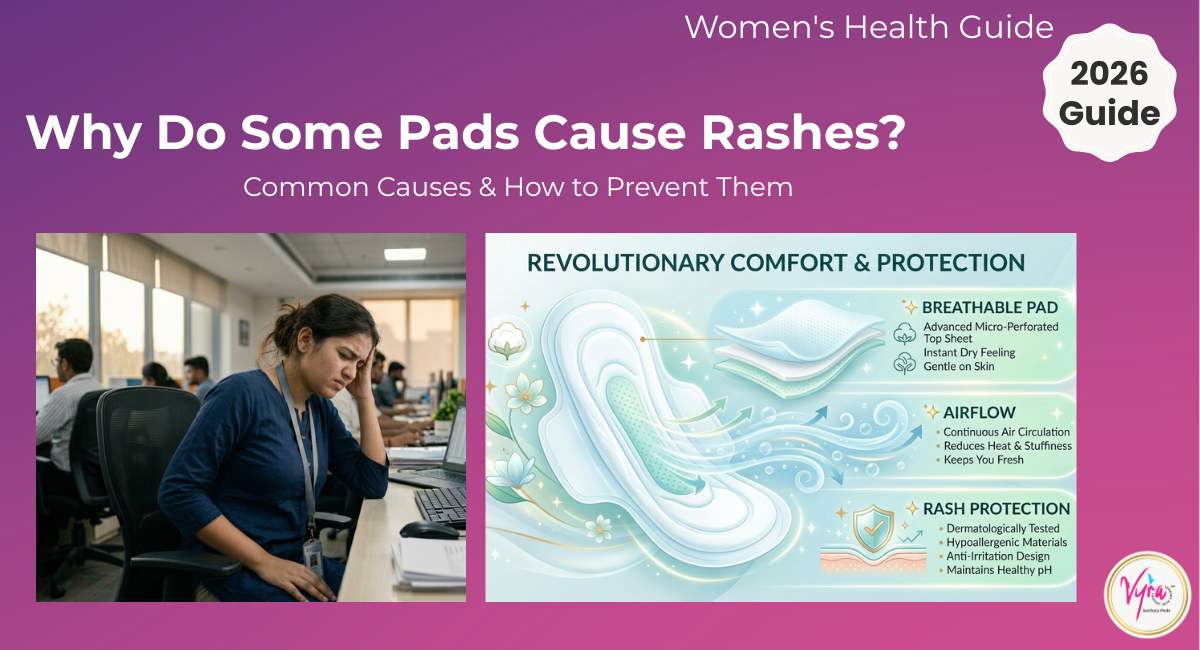
Why Do Sanitary Pads Cause Rashes? Common Reasons & Prevention Tips
Introduction
Sanitary pad rashes can cause itching, redness, burning, irritation, or discomfort during your period. While menstruation itself is not necessarily the cause, factors such as moisture, sweat, friction, prolonged pad use, fragrances, and individual skin sensitivity may contribute to irritation.
The type of sanitary pad you use can also affect comfort. Features such as breathability, a soft surface, moisture management, fragrance-free materials, and a comfortable fit may be especially important for women who are prone to irritation.
In this guide, we’ll explain why sanitary pads can cause rashes, what may increase the risk of irritation, how to reduce discomfort, and what to look for when choosing a more skin-friendly sanitary pad.
What Is a Sanitary Pad Rash?
A sanitary pad rash refers to irritation, redness, itching, or discomfort in the skin that comes into prolonged contact with a sanitary pad.
Symptoms may include:
- itching
- redness
- burning sensation
- irritation
- discomfort while walking
Many women experience this occasionally, especially during hot and humid weather.
1. Trapped Moisture and Sweat
One of the most common reasons for period rashes is prolonged moisture.
During menstruation, heat, sweat, and humidity can create a moist environment that may increase discomfort and skin irritation.
Pads designed with better breathability may help women feel more comfortable during long hours of wear.
2. Lack of Breathability
Airflow matters more than many women realize.
Pads with poor ventilation may trap heat and moisture, especially during summer, travel, or long workdays.
Breathable sanitary pads are often preferred because they can help improve comfort throughout the day.
3. Fragrances and Added Chemicals
Some women have sensitive skin and may react to heavily scented hygiene products.
Artificial fragrances are often added to reduce odor, but sensitive users may prefer fragrance-free sanitary pads for a gentler experience.
4. Friction During Long Wear
Pads that remain in place for extended periods may create friction against the skin.
This friction, combined with sweat and moisture, can increase irritation and discomfort.
Changing sanitary pads regularly is important for maintaining hygiene and comfort.
5. Sensitive Skin
Every woman’s skin is different.
Some women naturally have more sensitive skin and may experience irritation even when others do not.
For such users, softer and more breathable sanitary pads may provide better comfort.
What Does a Sanitary Pad Rash Feel Like?
- Itching or persistent irritation
- Redness
- Burning or stinging sensation
- Chafing or soreness
- Discomfort while walking
- Irritation that becomes worse with heat, sweat or prolonged wear
How to Reduce the Risk of Period Rashes
Period rashes can have different causes, so there is no single solution that works for everyone. However, simple menstrual hygiene habits and choosing a comfortable, breathable sanitary pad can help reduce the risk of irritation.
Change Your Sanitary Pad Regularly
Avoid wearing the same sanitary pad for longer than necessary. As menstrual fluid, sweat, and moisture accumulate, prolonged contact with the skin can increase discomfort and irritation.
Choose your changing frequency based on your menstrual flow and how wet or uncomfortable the pad feels.
Choose a Breathable Sanitary Pad
Breathable materials can help reduce heat and moisture build-up around the skin. This can be especially useful during hot weather or when you are active for long periods.
Look for a sanitary pad with a comfortable, breathable top layer rather than focusing only on absorbency.
Consider Fragrance-Free Sanitary Pads
Some sanitary pads contain added fragrances or other ingredients that may irritate sensitive skin.
If you frequently experience itching or irritation, consider choosing a fragrance-free sanitary pad and see whether it feels more comfortable for your skin.
Choose a Soft, Skin-Friendly Top Sheet
The surface of a sanitary pad stays in contact with your skin for several hours. A soft, comfortable top sheet can help minimise the feeling of roughness and friction.
For women with sensitive skin, the top-sheet material can therefore be an important factor when choosing a sanitary pad.
Wear Comfortable, Breathable Clothing
Tight clothing can increase heat, sweating, and friction around the intimate area.
During your period, comfortable underwear and breathable clothing can help reduce unnecessary moisture and friction.
Maintain Good Menstrual Hygiene
Change your pad when it becomes sufficiently wet or uncomfortable, keep the intimate area clean and dry, and wash your hands before and after changing your pad.
Avoid using harsh soaps or heavily fragranced products on sensitive intimate skin.
What to Look for in a Sanitary Pad If You Have Sensitive Skin
If your skin is prone to itching, redness, or irritation during your period, the materials and design of your sanitary pad are worth considering. No single pad works for everyone, but certain features may help improve comfort and reduce unnecessary friction or moisture around the skin.
1. Soft, Comfortable Top Sheet
The top sheet is the part of the pad that comes into direct contact with your skin. A soft, comfortable surface can help minimise the feeling of roughness and friction during wear.
2. Breathable Design
A breathable pad can help reduce the build-up of heat and moisture around the skin. This may be particularly helpful during hot weather, physical activity, or longer periods of wear.
3. Fragrance-Free Options
If you experience irritation or sensitivity, consider choosing a sanitary pad without added fragrance. Fragrances and other ingredients may not suit everyone, particularly those with sensitive skin.
4. Good Absorption
A pad that absorbs menstrual fluid effectively can help keep the surface feeling drier. Choosing an absorbency level appropriate for your flow is important for both comfort and protection.
5. Secure Fit and Wings
A pad that stays properly positioned can help reduce unnecessary movement and friction. Secure wings can also help keep the pad in place during walking, working, travelling, or other daily activities.
6. The Right Size for Your Flow
Size matters too. A pad that is too small for your flow may become saturated quickly and increase the risk of leakage. A larger size can provide additional coverage when you need it. Choose the size based on your flow and comfort rather than age alone.
Why Choose VYRA Sanitary Pads for Comfortable Periods?
VYRA Sanitary Pads are designed with comfort, absorbency, and skin-friendly features in mind. For women who are concerned about period rashes, itching, or irritation, choosing a pad with a soft surface, breathable design, and appropriate absorbency can make the period experience more comfortable.
VYRA combines a cotton-soft top sheet, high-absorption core, odour-lock technology, and an ultra-thin design to provide comfortable protection during your period.
Cotton-Soft Top Sheet
The soft top sheet is designed to provide a comfortable surface against the skin and help minimise the feeling of roughness and friction.
Breathable Comfort
A breathable design can help reduce heat and moisture build-up, helping you stay more comfortable during your period.
High-Absorption Core
VYRA uses a high-absorption SAP core designed to absorb menstrual fluid effectively and help keep the surface feeling drier.
Fragrance-Free Protection
VYRA pads are made without added fragrance, making them an option for women who prefer fragrance-free menstrual products.
Ultra-Thin Yet Protective
A slim pad can provide protection without the unnecessary bulk, helping you move comfortably through your daily routine.
View All VYRA Products
Conclusion
Period rashes are not always caused by menstruation itself. Factors such as moisture, friction, breathability, fragrances, and individual skin sensitivity can all play a role.
Understanding these factors can help women make more informed choices and enjoy a more comfortable period experience.
👉 Explore VYRA Rash-Free Sanitary Pads for Sensitive Skin →
Frequently Asked Questions About Sanitary Pad Rashes
Can sanitary pads cause rashes?
Some women may experience irritation, redness, itching, or discomfort while using sanitary pads. Possible contributing factors include moisture, friction, prolonged wear, fragrances, certain materials, and individual skin sensitivity.
Why do I get itching after using sanitary pads?
Itching may be related to moisture, friction, prolonged contact with the pad, skin sensitivity, or a reaction to certain materials or added fragrances. If itching keeps returning, consider whether changing the pad type or your menstrual hygiene routine makes a difference.
Can pads cause itching and irritation?
Yes, some people may experience itching or irritation associated with pad use. Moisture, friction, heat, prolonged wear, fragrances, and individual sensitivity can all contribute to discomfort.
Are fragrance-free sanitary pads better for sensitive skin?
Fragrance-free pads can be a useful option for people who find fragranced products irritating. However, skin sensitivity varies from person to person, so choosing a soft, comfortable and breathable pad may also be important.
How can I prevent sanitary pad rashes?
Changing your pad when it becomes wet or uncomfortable, maintaining good menstrual hygiene, choosing a comfortable and breathable pad, avoiding unnecessary fragrances, and wearing breathable clothing may help reduce the risk of irritation.
What should I look for in a sanitary pad if I have sensitive skin?
Look for features such as a soft top sheet, comfortable fit, appropriate absorbency, breathable construction, and fragrance-free options if fragrances tend to irritate your skin. Choosing the right size for your menstrual flow can also help improve comfort.
Can a sanitary pad rash happen even with a good-quality pad?
Yes. Skin sensitivity varies between individuals, and irritation can have several possible causes. A pad that feels comfortable for one person may not feel the same for another. If irritation repeatedly occurs with a particular product, consider stopping its use and discussing persistent symptoms with a healthcare professional.
When should I see a doctor for a rash during my period?
If irritation is severe, persistent, worsening, painful, spreading, or accompanied by other concerning symptoms, it is a good idea to seek medical advice rather than assuming it is simply a sanitary pad rash.
Related Articles :
You may also like:
Shilpa Rao
12 posts since 2026
Comments are closed.