
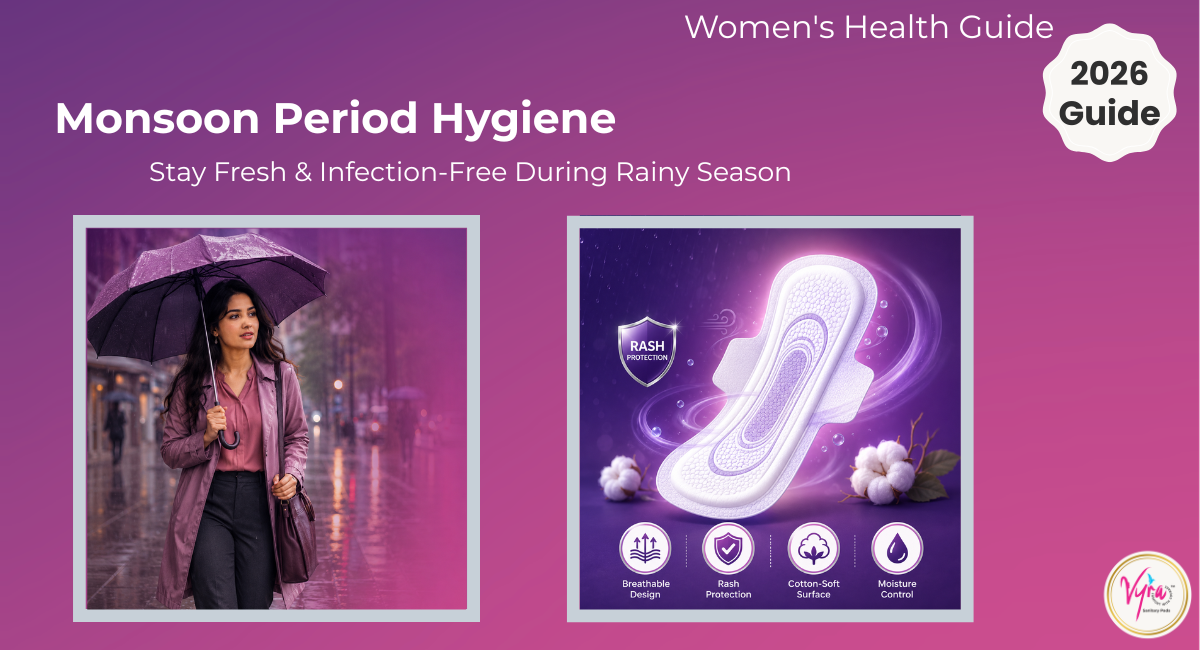
Monsoon Period Hygiene: How to Stay Fresh & Infection-Free During Rainy Season (2026 Guide)
Introduction
The rainy season brings welcome relief from the summer heat, but it also creates the perfect environment for bacteria and fungal growth. Higher humidity, damp clothes, excessive sweating, and prolonged moisture can increase the risk of irritation, itching, unpleasant odour, and infections during your menstrual cycle.
Fortunately, maintaining proper period hygiene during the monsoon is simple with the right habits and the right sanitary pad.
In this guide, we’ll share practical tips to help you stay fresh, comfortable, and confident throughout your period during the rainy season.
Why Is Period Hygiene More Important During Monsoon?
During monsoon, the combination of humidity and moisture creates ideal conditions for bacterial growth.
Women commonly experience:
- Increased sweating
- Moisture build-up
- Skin irritation
- Unpleasant odour
- Rash around the intimate area
- Higher risk of fungal infections
Although periods themselves don’t cause infections, poor menstrual hygiene can increase the chances of discomfort.
8 Essential Monsoon Period Hygiene Tips
1. Change Your Pad Every 4–6 Hours
Never wear the same sanitary pad for too long.
Even if your flow is light, moisture and bacteria continue to accumulate.
Changing your pad every 4–6 hours helps:
- Reduce bacterial growth
- Prevent unpleasant odour
- Lower the risk of rashes
- Keep you feeling fresh
2. Choose Breathable Sanitary Pads
A breathable pad allows better air circulation and reduces heat and moisture.
Look for pads with:
- Cotton-soft top sheet
- Breathable design
- High absorbency
- Skin-friendly materials
Breathable sanitary pads help reduce irritation, especially during humid weather.
👉 Related Reading:
Best Sanitary Pads for Sensitive Skin
3. Wear Dry Cotton Underwear
Avoid synthetic fabrics during the rainy season.
Cotton underwear:
- Absorbs sweat
- Improves airflow
- Reduces trapped moisture
- Helps prevent irritation
If your clothes become wet in the rain, change into dry clothing as soon as possible.
4. Maintain Proper Intimate Hygiene
Wash the external intimate area using clean water.
Avoid:
- Harsh soaps
- Strong perfumes
- Chemical washes
These products may disturb the natural pH balance and increase irritation.
5. Stay Dry After Using the Washroom
Many women overlook this simple habit.
Always gently dry the area before wearing a fresh sanitary pad.
Excess moisture trapped beneath a pad can contribute to skin discomfort.
6. Choose the Right Pad Size
Using a pad that’s too small may lead to leakage, forcing frequent adjustments and increasing friction.
Choose your pad according to:
- Flow level
- Daily activity
- Overnight protection
👉 Related Reading:
How to Choose the Right Sanitary Pad Size
7. Drink Plenty of Water
Hydration supports overall health during your menstrual cycle.
Drinking enough water may help:
- Reduce bloating
- Improve circulation
- Support normal body functions
- Keep you feeling better during humid weather
8. Dispose of Used Pads Properly
Wrap your used sanitary pad before disposal.
Never flush sanitary pads down the toilet.
Proper disposal helps maintain hygiene and protects the environment.
Signs You Shouldn’t Ignore
Consult a healthcare professional if you experience:
- Persistent itching
- Burning sensation
- Strong unpleasant odour
- Green or yellow discharge
- Severe redness
- Painful rashes
These symptoms may indicate an infection that requires medical advice.
Relatable reading :Can Sanitary Pads Cause Itching?
Why Choosing the Right Sanitary Pad Matters During Monsoon
Your sanitary pad plays a significant role in maintaining comfort during humid weather.
A good sanitary pad should offer:
✔ Breathable design
✔ Cotton-soft top sheet
✔ High absorbency
✔ Rash-free comfort
✔ Day & night protection
✔ No added fragrance chemicals
These features help you stay comfortable even during long working hours, travel, or college.
Why Women Choose VYRA During Every Season
At VYRA, we believe period care should never compromise comfort.
Our sanitary pads are thoughtfully designed with:
- Cotton-soft top sheet
- Advanced SAP absorbent core
- Breathable construction
- Rash-free comfort
- No added fragrance chemicals
- Reliable day and night protection
Whether it’s summer heat or monsoon humidity, VYRA is designed to help you stay fresh and confident.
Conclusion
Rainy weather shouldn’t make your period uncomfortable.
Simple habits like changing your pad regularly, staying dry, wearing breathable clothing, and choosing the right sanitary pad can make a significant difference in maintaining menstrual hygiene during the monsoon.
Prioritise comfort, stay fresh, and let every season be one of confidence.
Frequently Asked Questions (FAQs)
Can rainy weather cause period infections?
Rain itself doesn’t cause infections, but increased humidity and moisture can encourage bacterial and fungal growth if proper hygiene isn’t maintained.
How often should I change my sanitary pad during monsoon?
It is recommended to change your sanitary pad every 4–6 hours, or earlier if it becomes soaked.
Are cotton-soft sanitary pads better during the rainy season?
Yes. Cotton-soft top sheets are generally more breathable and gentle on the skin, making them a comfortable choice during humid weather.
Can wearing wet clothes during periods cause rashes?
Wet clothes and prolonged moisture can increase skin irritation and discomfort. Changing into dry clothes promptly can help reduce this risk.
Which sanitary pad is best for monsoon?
Choose a pad that offers:
- High absorbency
- Breathable design
- Cotton-soft surface
- Rash-free comfort
- Reliable day & night protection
Related Articles :
Shilpa Rao
12 posts since 2026
Comments are closed.